Tarantula Care Guide
Tarantulas (Family: Theraphosidae) are diverse, long-lived invertebrates that vary significantly in behavior, temperament, and environmental needs. Proper care depends on understanding both their lifestyle type (arboreal, terrestrial, fossorial) and whether they are New World or Old World species.
This guide will help you understand those differences so you can provide species-appropriate care.
Basic Care
Temperature & Humidity
Most commonly kept tarantulas thrive at normal household temperatures.
Ideal temperature range: 68–78°F
Avoid prolonged exposure below 65°F or above 85°F.
Tarantulas do not require heat lamps. If additional warmth is needed, warm the room, not the enclosure directly.
Humidity varies by species, but stability and ventilation matter more than constant misting.
General guidelines:
Terrestrial species: Partially moist substrate with a dry surface layer
Fossorial species: Deeper, slightly compact substrate that retains some moisture
Arboreal species: Moderate humidity with strong cross ventilation
Avoid waterlogged substrate. Overly damp enclosures are a common cause of mold and stress.
Feeding
Tarantulas are ambush predators that respond to movement.
Common feeder insects include crickets, roaches, and mealworms (appropriately sized).
Feeding frequency depends on age:
Slings: 2–3 times per week
Juveniles: Once per week
Adults: Every 1–2 weeks
Prey should not exceed the size of the tarantula’s abdomen.
Remove uneaten prey within 24 hours — especially if your tarantula has sealed itself off or is showing signs of premolt.
It is normal for tarantulas to fast before molting. A healthy tarantula can go weeks without food.
Molting
Molting allows tarantulas to grow and is one of the most sensitive stages in their life cycle.
Common premolt signs:
Refusal to eat
Reduced activity
Dull coloration
Darkened/shiny abdominal patch (New World species)
During molt, the tarantula may flip onto its back. This is normal.
Do not disturb, feed, or mist directly during this time.
After molting, allow several days for the exoskeleton and fangs to harden before offering food again. Larger specimens may require up to a week or more.
Stable conditions and patience are key to a successful molt.
New World Tarantuals
(North, Central, and South America)
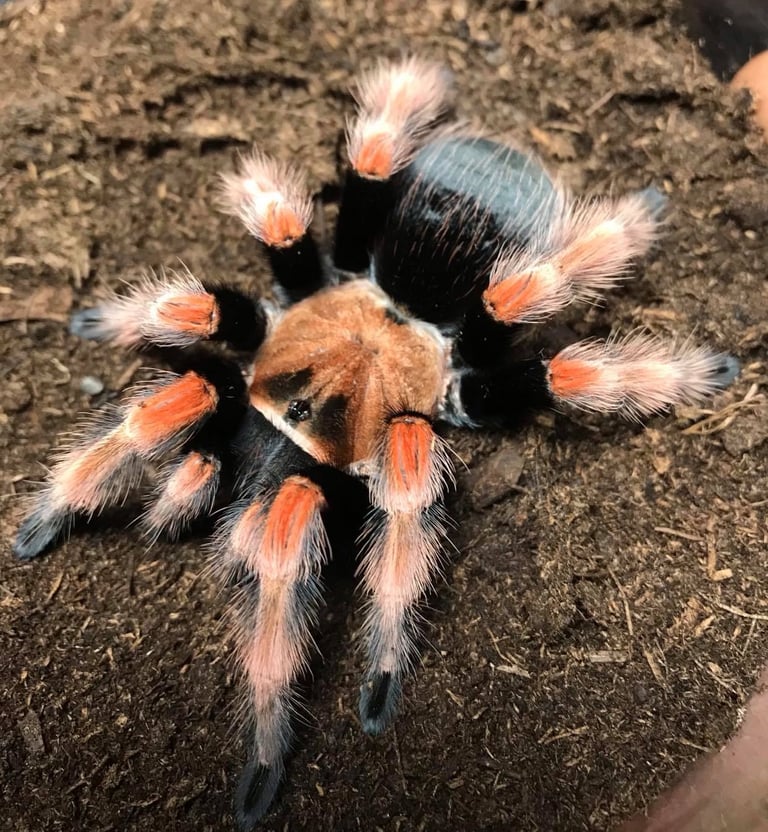
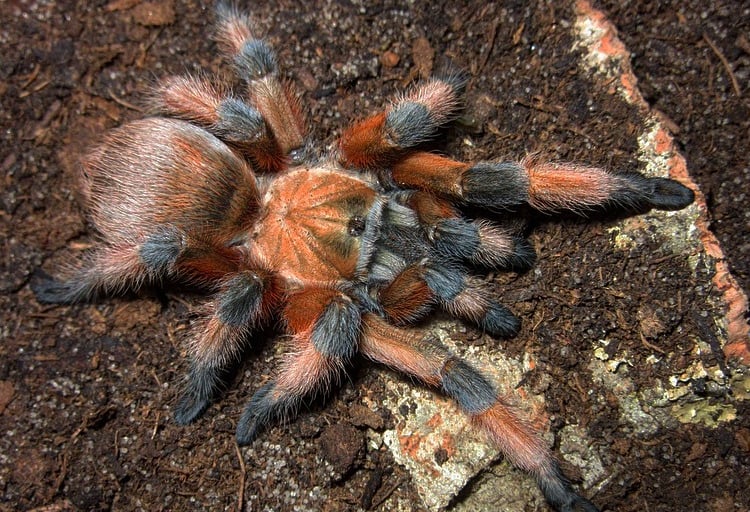
New World tarantulas originate from North, Central, and South America. Many of the most popular beginner species fall into this category, including Lasiodora, Brachypelma, Grammostola, and Aphonopelma species.
These tarantulas possess urticating hairs on their abdomen. When threatened, they typically rely on kicking these hairs as a primary defense rather than immediately biting. While the hairs can cause skin irritation, this defensive strategy generally makes New World species slower to escalate and more predictable in behavior.
Their venom is typically mild, and bites are uncommon when the spider is housed and maintained properly. Because of their calmer disposition and defensive tendencies, many New World tarantulas are well suited for beginner and intermediate keepers.
Old World Tarantulas
(Africa, Asia, Europe)
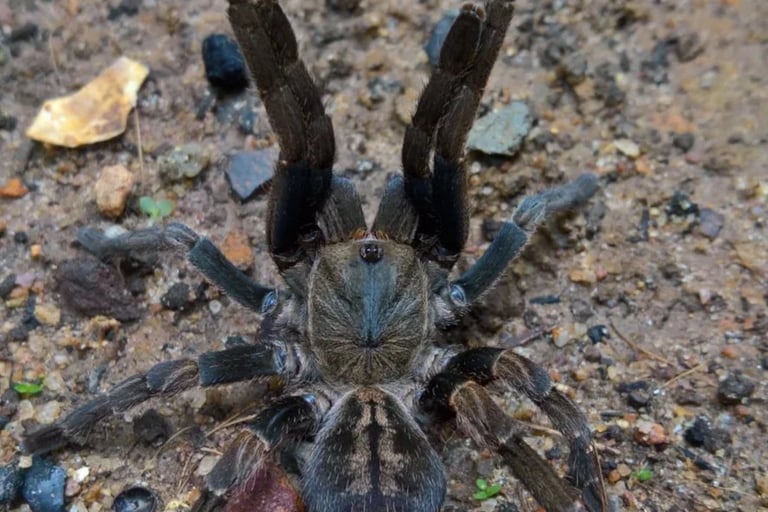
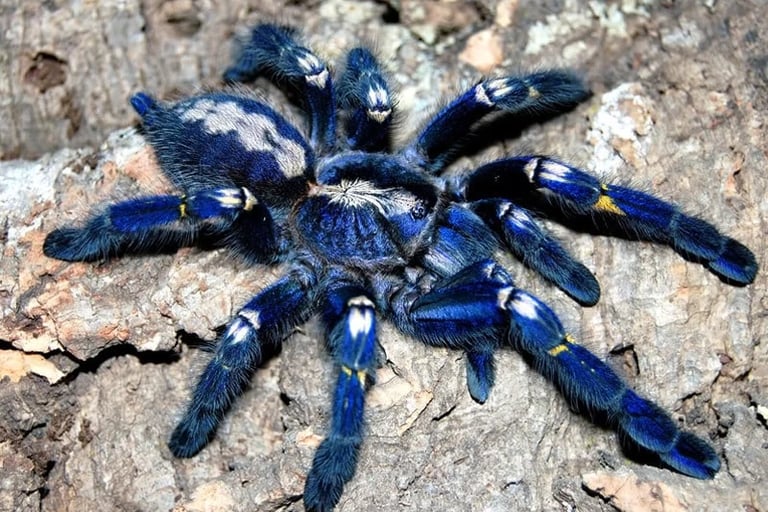
Old World tarantulas originate from Africa, Asia, and parts of Europe. Species such as Monocentropus and Poecilotheria are admired for their striking appearance and speed, but they are also known for a more reactive temperament.
Unlike New World species, Old World tarantulas do not have urticating hairs. Without that first line of defense, they rely more heavily on speed and biting if they feel threatened. They are often faster, more defensive, and less tolerant of disturbance during enclosure maintenance.
Old World species are generally recommended for experienced keepers who understand defensive behavior and maintain secure enclosures.
New World vs Old World
Which Should You Choose?
If you are new to tarantulas, a calm New World terrestrial species is the safest starting point.
Old World tarantulas are incredibly beautiful and fascinating, but they demand:
Secure enclosures
Careful maintenance techniques
Experience reading defensive behavior
At Obsidian Inverts, we encourage new keepers to start with species appropriate for their comfort level and experience.
If you are unsure, reach out before purchasing.
Arboreal Tarantulas
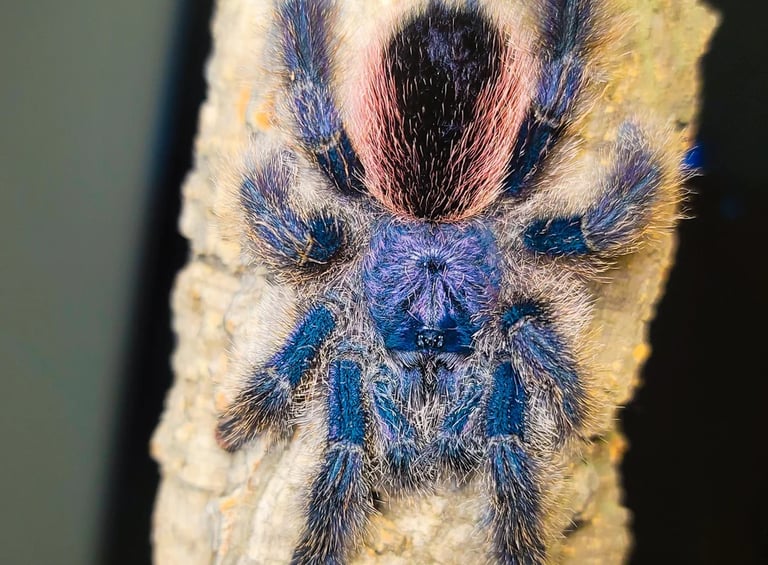
Arboreal tarantulas are tree-dwelling species that spend the majority of their lives above ground. In the wild, they inhabit tree trunks, hollows, and elevated bark structures. Because of this, their enclosure design and husbandry differ significantly from terrestrial or fossorial species.
Poecilotheria, Avicularia, Caribena, Psalmopoeus
Enclosure & Setup
Arboreal tarantulas require vertically oriented enclosures with strong cross ventilation. Height is more important than floor space.
Tall enclosure (more height than width)
Upright cork bark or climbing structure
Secure, escape-proof lid
Light substrate layer at bottom
Strong side ventilation
Avoid short, terrestrial-style enclosures. These species naturally web and hunt above ground.
Feeding & Temperament
Arboreal tarantulas are active hunters and typically have strong feeding responses.
Many arboreal species are fast and reactive, especially Old World varieties.
Expect quick upward movement
Not recommended for handling
Always open enclosures carefully
Falls from height can be fatal, so maintenance should be calm and controlled.
Terrestrial Tarantulas
Terrestrial tarantulas are ground-dwelling species that spend most of their lives on or near the substrate. Many of the most popular beginner tarantulas fall into this category due to their generally slower movement and predictable defensive behavior. When properly housed with adequate substrate depth and minimal fall risk, terrestrial species make excellent long-term display invertebrates.
Lasiodora, Brachypelma, Aphonopelma, Grammostola
Enclosure & Setup
Terrestrial tarantulas are ground-dwelling species that spend most of their time on or near the substrate. Unlike arboreals, floor space matters more than height.
Enclosure wider than tall
3–5+ inches of compactable substrate
Secure hide (cork bark, half log, etc.)
Minimal vertical climbing space
Stable, well-ventilated environment
Excessive height increases fall risk. A fall from even a few inches can cause serious abdominal injury.
Feeding & Temperament
Terrestrial tarantulas are ambush predators that wait for prey to pass.
Many New World terrestrial species are slower and more predictable than arboreals.
May kick urticating hairs when stressed
Generally calmer than Old World species
Handling not recommended, but easier to manage during maintenance
Always avoid sudden movements and never disturb a tarantula during molt.
Fossorial Tarantulas
Fossorial tarantulas are burrowing species that spend most of their lives underground. In the wild, they construct deep tunnel systems for protection, humidity control, and ambush hunting. Because of this natural behavior, proper substrate depth and enclosure setup are critical. Fossorial species are often more defensive and are best suited for keepers who understand their specific environmental needs.
Haplopelma, Cyriopagopus, Pelinobius, Chilobrachys
Enclosure & Setup
Fossorial tarantulas require deep, compactable substrate to allow natural burrowing behavior.
Enclosure wider than tall
5–8+ inches of compact substrate
Starter burrow or angled cork bark
Secure, escape-proof lid
Strong ventilation without excessive dryness
These species may remain hidden for extended periods. A lack of visibility is normal and not a sign of poor health.
Feeding & Temperament
Fossorial tarantulas are ambush predators that often wait inside their burrow for prey. These species may pull prey underground.
Many fossorial tarantulas, particularly Old World species, are defensive and fast.
Quick retreat into burrow
Defensive posture when exposed
Not recommended for handling
Maintenance should be calm and deliberate. Always assume a fossorial species will defend itself if its burrow is disturbed.