
Jumping Spider Care Guide
Jumping spiders (Family: Salticidae) are intelligent, visually oriented hunters known for their bold personalities and interactive behavior. Species such as Phidippus audax (Bold Jumping Spider) and Phidippus regius (Regal Jumping Spider) are among the most popular pet jumping spiders due to their manageable size and hardy nature.
This guide covers everything you need to confidently care for your jumping spider.
Common Species in the Hobby
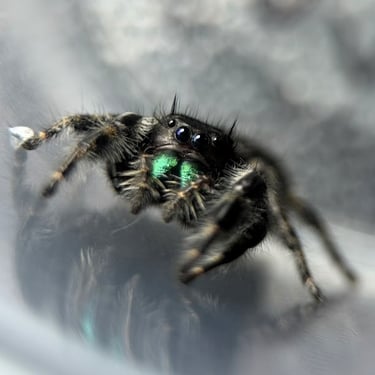
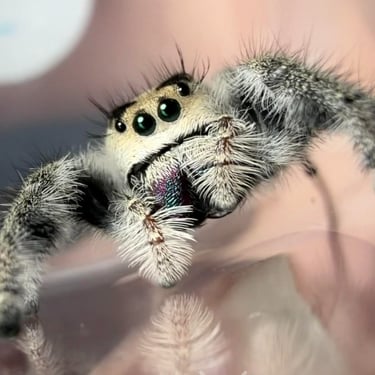
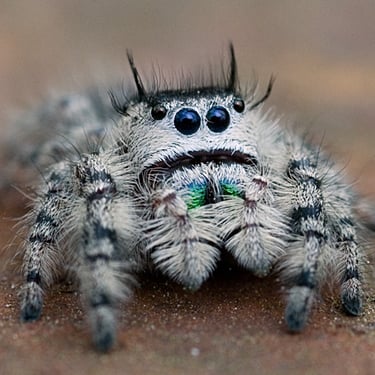
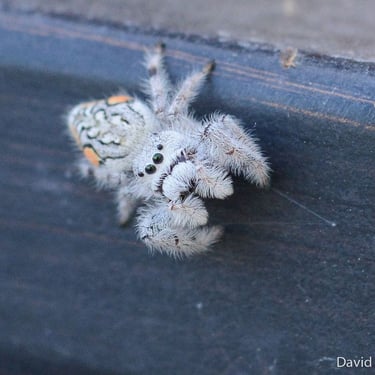
Phidippus audax
Bold Jumping Spider
Native to the US
Phidippus regius
Regal Jumping Spider
Native to Southeastern US
Phidippus otiosus
Canopy Jumping Spider
Native to Western US
Phidippus fartilis
White Jumping Spider
Native to Southeastern US
Typical Lifespan
Males: ~8–12 months
Females: 1–2 years (sometimes longer)
Enclosure Setup
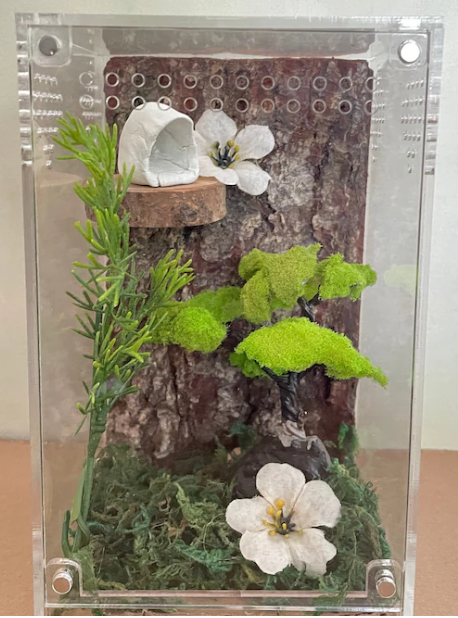
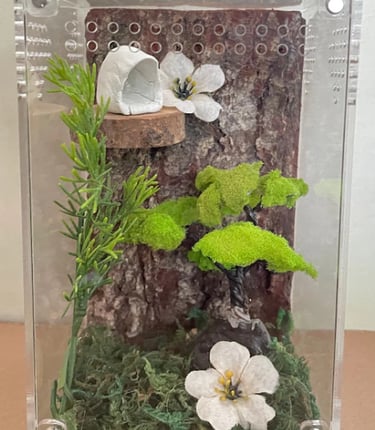
Jumping spiders require ventilated, vertically oriented enclosures.
Recommended enclosure size:
Juveniles: 2"x2"x3" or similar
Adults: 4"x4"x6" or larger
They prefer height because they build hammock webs at the top.
Important enclosure features:
Cross ventilation (side holes, not just top)
Secure lid (they are excellent escape artists)
Lightweight decor (twigs, cork bark, foliage)
No standing water
Avoid large enclosures for small juveniles as it makes feeding difficult.
Temperature & Humidity
Jumping spiders thrive at normal room temperatures.
Ideal temperature: 70–78°F
Slight nighttime drops are fine
Avoid temperatures below 65°F or above 85°F
Humidity:
Light misting 1–2 times per week
Provide small water droplets on enclosure walls
Do not saturate substrate
Good airflow is more important than high humidity.
Feeding
Jumping spiders are active hunters that require live prey.
Feeder options:
Flightless fruit flies (juveniles)
Small mealworms
Small crickets
Bottle flies (excellent for adults)
Feeding schedule:
Juveniles: every 3-5 days
Adults: every 7-10 days
Only feed prey smaller than the spider’s abdomen.
Remove uneaten prey after 24 hours.
Molting
Molting is a natural process where the spider sheds its exoskeleton to grow.
Signs of premolt:
Refusing food
Building a thick hammock
Reduced activity
Darkened abdomen
Swollen abdomen
Do NOT disturb your spider during molt.
Do not feed until the spider has hardened (usually 3–5 days after molting).
Handling
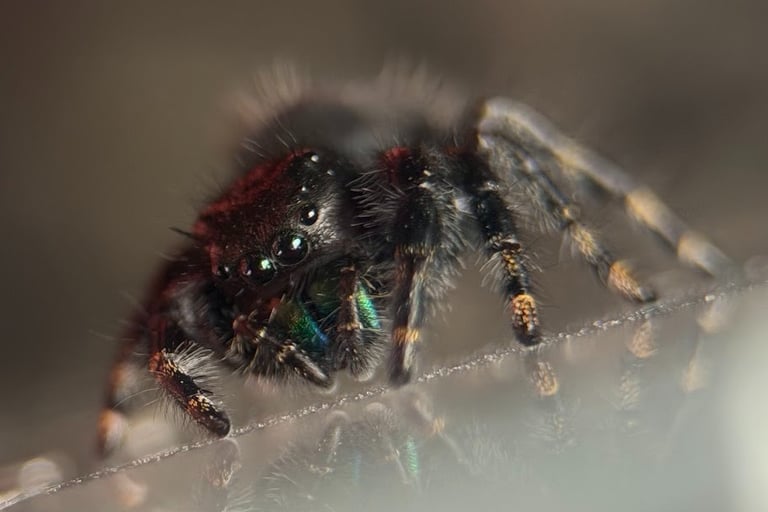
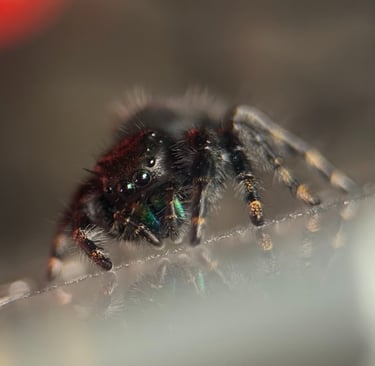
Jumping spiders are curious and visually aware of their environment.
They may:
Turn to look at you
Tilt their head
Approach movement
Handling is optional and should always be gentle and supervised. Never force interaction. Always handle low to the ground or above something soft to prevent injuries from falls.
They are not aggressive and bites are extremely rare.
Common Mistakes
Even though jumping spiders are beginner-friendly, small husbandry mistakes can cause stress or health issues. Here are the most common problems new keepers run into:
Over-Misting
Jumping spiders do not require high humidity.
Over-misting can:
Cause mold growth
Create stagnant air
Lead to bacterial buildup
Stress the spider
Light misting 1–2 times per week is sufficient. The goal is small water droplets — not damp substrate.
Good airflow is more important than high humidity.
Housing Too Large for Juveniles
Small spiders in oversized enclosures struggle to find food.
This can result in:
Missed feedings
Slower growth
Unnecessary stress
Juveniles do best in appropriately sized enclosures that make hunting manageable. You can upgrade enclosure size as they grow.
Leaving Prey Unattended
Prey, especially crickets, can injure or stress a spider - especially during premolt or after molting.
Never leave live crickets in the enclosure overnight if they are not eaten.
Always remove uneaten prey after 24 hours.
Poor Ventilation
Jumping spiders require cross ventilation.
Enclosures with only top holes can trap humidity and stale air.
Poor airflow can contribute to:
Mold
Stress
Failed molts
Choose enclosures with side ventilation holes.
Using Unsafe Decor or Adhesives
Avoid:
Sharp decor
Treated wood
Hot glue inside enclosures
Artificial plants with exposed wire
Always ensure decor is secure and non-toxic.
Disturbing During Molt
This is one of the most serious mistakes.
If your spider:
Refuses food
Builds a thick hammock
Becomes inactive
It may be in premolt.
Do not:
Open the enclosure repeatedly
Mist directly on the hammock
Attempt to feed
Disturbing a spider mid-molt can result in injury or death.
Frequently asked questions
Are jumping spiders good beginner pets?
Yes. Jumping spiders are one of the best beginner-friendly invertebrates. They do not require heating pads, large enclosures, or complex humidity control. With proper feeding and light misting, they thrive in normal household conditions.
Can jumping spiders live together?
No. Jumping spiders are solitary and may cannibalize one another if housed together.
Do jumping spiders need a heat lamp?
No. Standard room temperature (70–78°F) is ideal. Avoid placing enclosures near windows, direct sunlight, or vents.
How long do jumping spiders live?
Males: 8–12 months
Females: 1–2 years
Females typically outlive males.
How often should I feed my jumping spider?
Juveniles should be fed every 3-5 days. Adults every 7-10 days. The abdomen should look slightly rounded but not overly large.
Why is my jumping spider not eating?
Common reasons include:
Premolt (about to shed)
Recently molted
Overfeeding
Stress from enclosure changes
As long as the abdomen is not shrinking significantly, short fasting periods are normal.